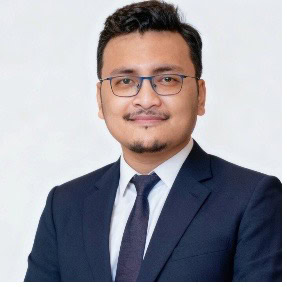
Debajyoti Das, PhD
Hans Popper Memorial Postdoctoral Research Fellowship Award
$25,000 over one year
University of California Los Angeles (UCLA)
Dissecting a novel autophagy pathway in MASLD progression
Mentor: Rajat Singh, MD, MBBS
Fatty liver disease recently renamed MASLD (Metabolic Dysfunction-Associated Steatotic Liver disease), is becoming the most common liver condition worldwide. It ranges from simple fat buildup in the liver to severe inflammation, scarring (fibrosis), and even liver cancer. While we know that the liver clears fat using various mechanisms, one process-called lipophagy, where liver cells break down fat droplets using their own recycling machinery-is not yet fully understood, especially in how it contributes to disease progression. Our research focuses on a specific protein called VPS4B, which helps a lesser-known type of lipophagy called macrolipophagy. This process is thought to remove large, stubborn fat droplets that are otherwise difficult to break down. Our preliminary work shows that when VPS4B is missing in liver cells, these fat droplets accumulate, triggering inflammation and scarring. In mice, this leads to rapid disease progression, and in some cases, liver damage that looks like cirrhosis and early cancer. We aim to understand exactly how VPS4B helps remove these fat droplets, and how its loss disrupts liver health. We will use advanced imaging, mouse models, and gene profiling tools to track changes in different parts of the liver and study how VPS4B interacts with another protein, VPS4A, which handles smaller fat droplets. We will also study liver samples from mice and human liver cells in the lab to find out how VPS4B’s failure drives liver disease and whether it can be targeted for treatment. This work could open the door to new therapies that boost the liver’s natural fat-clearing systems to prevent or slow MASLD and its severe form like cirrhosis.