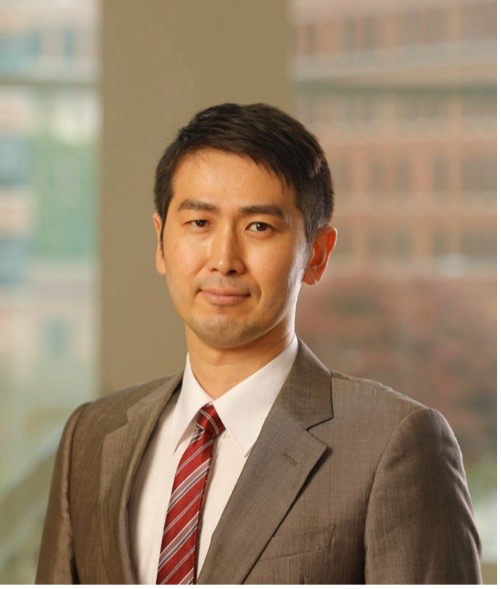
Yuki Bekki, MD, PhD
Pilot Research Award
$50,000 over one year
University of Rochester Medical Center (URMC), Rochester, NY
A Precision Biomarkers for Liver Transplant Selection and Outcomes in Unresectable Colorectal Liver Metastases
Colorectal cancer is the third most common cancer worldwide and a leading cause of cancer death. The liver is the most frequent site of metastasis, and patients with unresectable colorectal liver metastases (uCRLM) have poor outcomes. Liver transplant (LT) has emerged as a promising option for selected patients. Our institution advanced this field through the Rochester Protocol, refining selection criteria and establishing the largest North American transplant experience for uCRLM. We previously reported 91% 3-year survival in eligible patients, though only 11.2% qualified for LT. Recurrence remains high (up to 50%), highlighting the need for improved biologic risk prediction. Current selection relies on imaging and clinical features that incompletely reflect tumor biology. This underscores the need for molecular biomarkers. Circulating tumor DNA (ctDNA) reflects tumor-derived DNA in blood and may capture tumor burden and evolution, but its role in LT for uCRLM is not defined. The tumor immune microenvironment (TIME), including immune and liver-resident cells surrounding cancer cells, shapes tumor behavior. However, the TIME in patients with uCRLM who proceed to LT remains unknown, and these patients have undergone different treatment algorithms than patients who proceed to liver resection. We hypothesize that longitudinal ctDNA dynamics and spatial immune patterns within the TIME correlate with recurrence after transplant in uCRLM. We will leverage our transplant program, tissue repository, and systems immunology expertise to integrate serial ctDNA with spatial profiling of liver explants to characterize immune–tumor architecture to map immune subpopulations and spatial organization that predict recurrence post-LT. This study will generate a biologically informed framework for prediction of post-LT recurrence in patients with uCRLM by integrating ctDNA and tissue immune profiling to improve outcome prediction and enable more precise, personalized transplant care.